
Bike comparison
Yamaha R15 V4 vs MT-15 V2: clip-ons against a bar, now against later
One 155cc VVA single, one frame philosophy, two handlebars — and a wrinkle: the MT-15 V2 is still a projection in this sample catalogue while the R15 is in showrooms today. We sort the hardware from the timing.
- Yamaha R15 ₹1.55L
- Yamaha MT-15 V2 ₹1.68L
Head to head
- Price Yamaha R15 ₹1.55-1.72 lakh today against a projected ₹1.68-1.76 lakh band. The naked is forecast to cost more than the faired bike it shares everything with.
- Kerb weight Yamaha MT-15 V2 139 kg projected against 142 kg on the scale. Three kilograms, and the bar makes the difference feel larger in a parking lot.
- Claimed mileage Yamaha MT-15 V2 48 kmpl on the projection against the R15’s 42 — the highest claimed figure of any 155cc liquid-cooled motorcycle in this catalogue.
- Engine Even The same 155cc VVA single: 18.4 bhp at 10,000 rpm, 14.2 Nm on the R15 and 14.1 projected on the MT. Nothing separates them in a straight line.
- Top speed Yamaha R15 140 km/h indicated on the R15 against 130 on the MT’s provisional figures; the fairing earns its keep at the top of the tacho.
- Electronics Yamaha R15 The R15 M carries the quickshifter, two-level traction control and connectivity today. On the MT-15 V2 they are hoped for, not confirmed.
- City ergonomics Yamaha MT-15 V2 Aluminium handlebar instead of clip-ons, 170 mm of ground clearance against 165, and a longer 1,340 mm wheelbase for stability in a queue.
| Specification | Yamaha R15 ₹1.55L | Yamaha MT-15 V2 ₹1.68L |
|---|---|---|
| Ex-showroom price | ₹1.55L | ₹1.68L |
| Engine | 155 cc | 155 cc |
| Power | 18.4 bhp | 18.4 bhp |
| Torque | 14.2 Nm | 14.1 Nm |
| Mileage | 42 kmpl | 48 kmpl |
| Top speed | 140 kmph | 130 kmph |
| Gearbox | manual | manual |
| Kerb weight | 142 kg | 139 kg |
| Safety | Dual-channel ABS with slipper clutch and assist; no official crash-test rating | Dual-channel ABS is expected as standard; no crash-test rating applies |
| Body type | Sports | Sports |
| Status | available | upcoming |
| Categories won | Yamaha R15 wins 3 of 11 | Yamaha MT-15 V2 wins 2 of 11 |
Only specifications present in both records are listed. Figures are MotoSutra sample catalogue data.
There are comparisons where the two machines disagree about everything, and there are comparisons like this one, where Yamaha sells the same engine, the same frame architecture and the same 155cc argument twice — once with clip-ons and a fairing, once with a bar — and then adds a twist neither of the others has: the MT-15 V2 is still a projection. The R15 V4 is in showrooms; the MT-15 V2 is listed here for late 2026 with figures carried forward from the outgoing model. That asymmetry shapes every paragraph below.
One cylinder, written twice
The 155cc VVA single is the best-justified engine in Indian entry-sporting. Peak power arrives at 10,000 rpm and the unit genuinely enjoys the last quarter of the tacho, which means both bikes ask you to use the six-speed box the way a torquey commuter never requires. Out of a corner, the R15 pulls to its 140 km/h ceiling with aerodynamics helping; the MT’s projected 130 is a fair read of what a naked front end costs at speed. The torque figures — 14.2 Nm and a provisional 14.1 — confirm what a lap says anyway: these are the same motorcycle wearing different amounts of plastic.
If the update lands with the equipment Yamaha has quietly been preparing on the R15 M — quickshifter, traction control, connectivity — the MT becomes the stronger everyday case for the same money. That conditional is the entire suspense of this comparison, and no one should pretend otherwise.
Where the bar beats the clip-ons
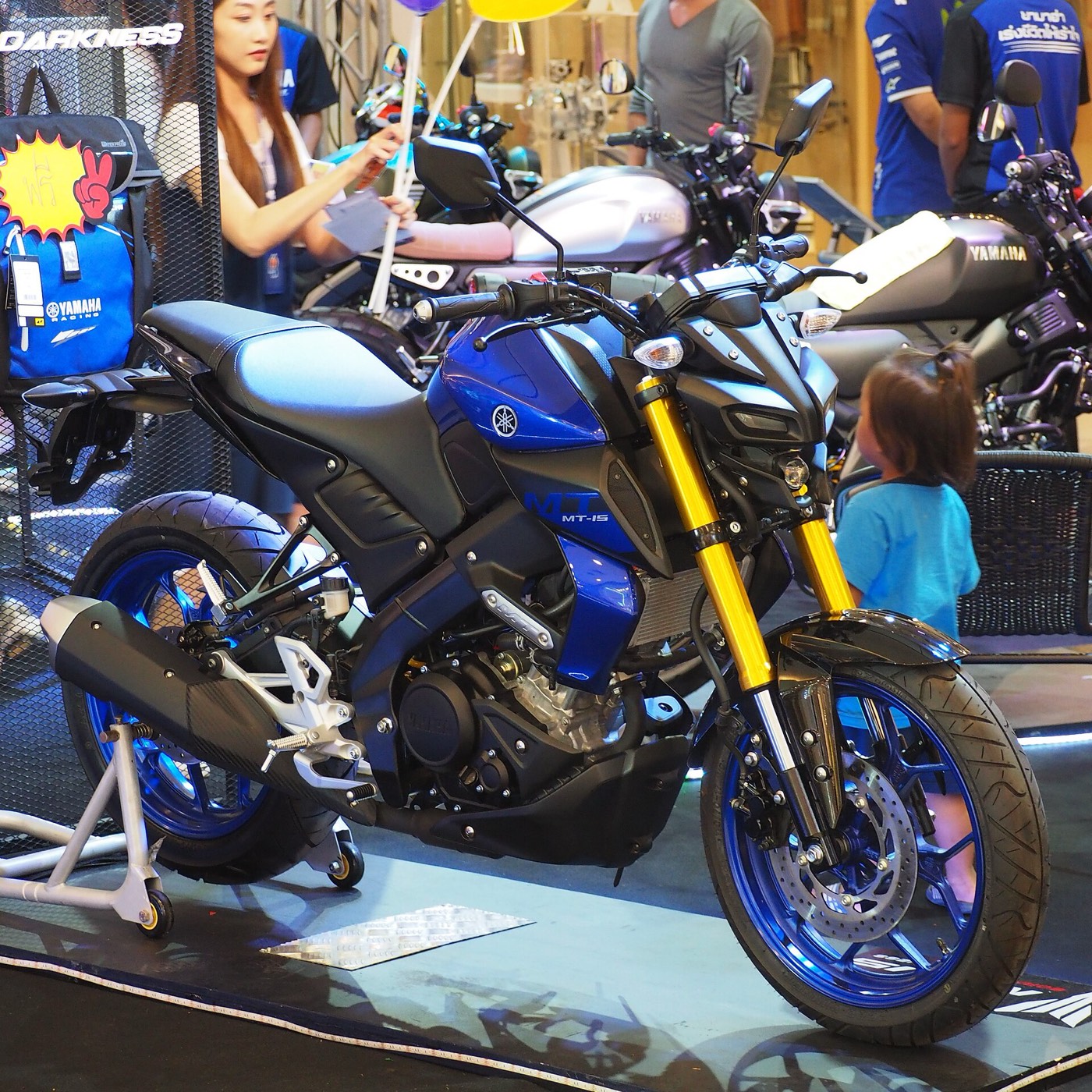
In traffic the MT’s advantage is not theoretical. An aluminium handlebar instead of clip-ons means the wrists are neutral rather than loaded, the levers are less strained at a jammed signal, and looking over a shoulder to change lanes is a neck movement rather than a lean. The projected 139 kg undercuts the R15’s 142, and 170 mm of ground clearance against 165 buys confidence over a breaker the R15’s pegs would report.
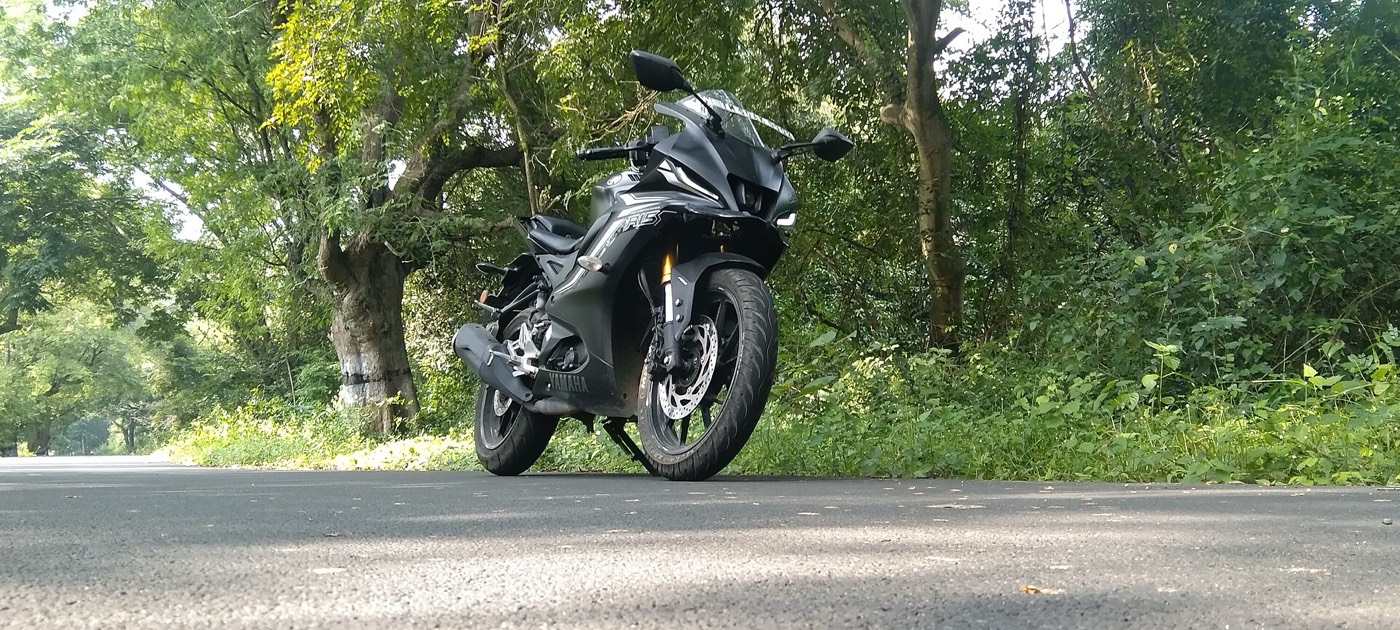
The R15’s counter is the thing Yamaha builds it for. The upside-down fork, the die-cast aluminium swingarm and the trellis-derived frame make it the most composed mid-corner chassis at 155cc sold in this country — the reference point every rival is described against. On a track day or an empty ghat section, the clip-ons put weight on the front brake in a way a bar never will, and the fairing lets the rider sit inside the air at 120 km/h instead of fighting it.
The honest summary: the R15 is the better motorcycle for the twelve corners a month you actually attack; the MT is the better motorcycle for the three hundred commutes.
Living with either
The R15’s compromises are the track-biased contract: high pegs that kiss a speed breaker when loaded, a rear end that reports broken tarmac directly to the pillion, and a split seat that is token as a passenger arrangement. Owners who ride mostly in traffic test these daily and test the cornering only occasionally.
The MT inherits the engine’s need for gear changes and, on the outgoing evidence, the firm rear suspension that is the segment’s most-criticised trait. What it adds on the projected side is claimed 48 kmpl — six better than the R15’s 42 — which over a 2,000-km month at real-world numbers is the difference between two fills and one-and-a-half. Riders who keep a 155 below 6,000 rpm report mileage comfortably beyond either claim.
Storage, service and resale are a wash: same brand, same dealer network, same consumables, and both hold value well in the used market for as long as the 155s stay the entry drug of choice.
The price, and the date
Yamaha’s projected band puts the naked above the faired bike: ₹1.68-1.76 lakh against the R15’s ₹1.55-1.72. That is not unprecedented — nakeds with premium finish sometimes out-price entry faired trims — but it means the MT has to earn its case on ergonomics and equipment, not money. The R15 V4 at ₹1.55 lakh is simply the cheapest way into this engine, and the R15 M at ₹1.68 lakh carries confirmed electronics that the MT has only been promised.
Timing matters more than the price sheet. A buyer today gets a homologated, rideable, reviewable motorcycle. A buyer who waits gets provisional figures, a launch date this catalogue marks as indicative, and an update that could just as easily arrive with a better console as with the quickshifter.
Which one, and when
Buy the R15 V4 if you want the chassis, the fairing and the confirmed quickshifter package now, or if any part of your riding is at a circuit. It is the sharper instrument and the safer purchase.
Buy the MT-15 V2 — by waiting for it — if your 155 is a traffic motorcycle: the bar, the weight, the projected mileage and, eventually, the R15’s electronics in naked form make it the more adult daily machine, provided Yamaha delivers the projection.
And if neither of those descriptions fits — if the office, the pillion and the budget are what actually decide your purchase — both of these are the wrong segment, and the catalogue’s 160s will thank you for the honesty.
The two models
Frequently asked questions
Is the MT-15 V2 the same engine as the R15 V4?
Yes — the same 155cc liquid-cooled variable-valve single, listed here at 18.4 bhp at 10,000 rpm with 14.1 Nm against the R15’s 14.2. The fairing and the bars are the difference; the cylinder is not.
Which one should I buy?
If you need a motorcycle this year, the R15 V4 — it is confirmed, cheaper at entry, and the R15 M carries electronics the MT has never officially been given. If you can wait into late 2026 and you ride mostly in traffic, the projected MT-15 V2 is the more livable package.
How reliable are the MT-15 V2 numbers in this comparison?
They are not. The MT-15 V2 is listed as upcoming in this sample catalogue with a projected 19 November 2026 launch; every figure quoted for it is carried over from the outgoing model and should be treated as provisional until Yamaha homologates the update.
Does the R15 V4 get a quickshifter?
From the R15 M variant at ₹1.68 lakh in this listing, yes — plus two-level traction control and phone connectivity. The base V4 at ₹1.55 lakh has the assist and slipper clutch but not the quickshifter.